Pattern Fantastique - August Jacket Sewing Pattern
£22.00
Only 2 available
One strong shape with two distinctly different finishes The Bound August for your thicker weights or The Faced August (description below) for the denim weight fabrics. SIZES 6 -30 SKILL LEVEL Intermediate - Experienced
DESIGN The Bound August (The Faced August details below) Designed for pre-quilted fabric or a thick blanket weight coating with a contrast-bound finish. Pockets squared off on one side and streamlined into the bound hem. The belt is a bias-covered rope utilising the finer bias fabric that compliments the already 3D form of this version. The outer sleeve binding is optional and has an option for a second tie at pocket height to wear the jacket without the belt.
FABRICS The Bound August (The Faced August details below) Quilting - For pre-quilted or DIY quilted fabrics, look for a stable feel to support the August curves. Cotton fill is preferable; very puffy polyester or slippery viscose fill may prove challenging to finish. Coating-A blanket weight coating with a firm weave to hold good form. Melton is a classic style of wool fabric perfect for the August 350- 600 GSM. Bias - A poplin-weight cotton is perfect. If you buy a pre-cut bias, the width should be 5 cm • 2”. Extensive details on fabric choices are available in the instructions.
DESIGN The Faced August Designed for heavier-weight denim or canvas fabric and finished with full-facing and top stitching for a utilitarian edge. The facing can be cut in the main fabric or contrasted for a peekaboo contrast or to lighten the bulk for machine-friendly construction. The pockets are upside-down arches patched on and scaled for each size. The belt is made from the main fabric, which is narrow, flat, and understated.
FABRICS The Faced August Denim, canvas, duck cloth or similar at a 300 gsm + weight. Suitable for outerwear jackets. To make the August easier to sew, use a lighter fabric for the facings and avoid overly thick junctions some domestic machines might struggle with. This can be a cotton poplin or twill 120 - 180 gsm. Add a mid-weight interfacing to stabilise lighter looser facing fabrics.
Get notified by email when this product is in stock.
One strong shape with two distinctly different finishes The Bound August for your thicker weights or The Faced August (description below) for the denim weight fabrics. SIZES 6 -30 SKILL LEVEL Intermediate - Experienced
DESIGN The Bound August (The Faced August details below) Designed for pre-quilted fabric or a thick blanket weight coating with a contrast-bound finish. Pockets squared off on one side and streamlined into the bound hem. The belt is a bias-covered rope utilising the finer bias fabric that compliments the already 3D form of this version. The outer sleeve binding is optional and has an option for a second tie at pocket height to wear the jacket without the belt.
FABRICS The Bound August (The Faced August details below) Quilting - For pre-quilted or DIY quilted fabrics, look for a stable feel to support the August curves. Cotton fill is preferable; very puffy polyester or slippery viscose fill may prove challenging to finish. Coating-A blanket weight coating with a firm weave to hold good form. Melton is a classic style of wool fabric perfect for the August 350- 600 GSM. Bias - A poplin-weight cotton is perfect. If you buy a pre-cut bias, the width should be 5 cm • 2”. Extensive details on fabric choices are available in the instructions.
DESIGN The Faced August Designed for heavier-weight denim or canvas fabric and finished with full-facing and top stitching for a utilitarian edge. The facing can be cut in the main fabric or contrasted for a peekaboo contrast or to lighten the bulk for machine-friendly construction. The pockets are upside-down arches patched on and scaled for each size. The belt is made from the main fabric, which is narrow, flat, and understated.
FABRICS The Faced August Denim, canvas, duck cloth or similar at a 300 gsm + weight. Suitable for outerwear jackets. To make the August easier to sew, use a lighter fabric for the facings and avoid overly thick junctions some domestic machines might struggle with. This can be a cotton poplin or twill 120 - 180 gsm. Add a mid-weight interfacing to stabilise lighter looser facing fabrics.


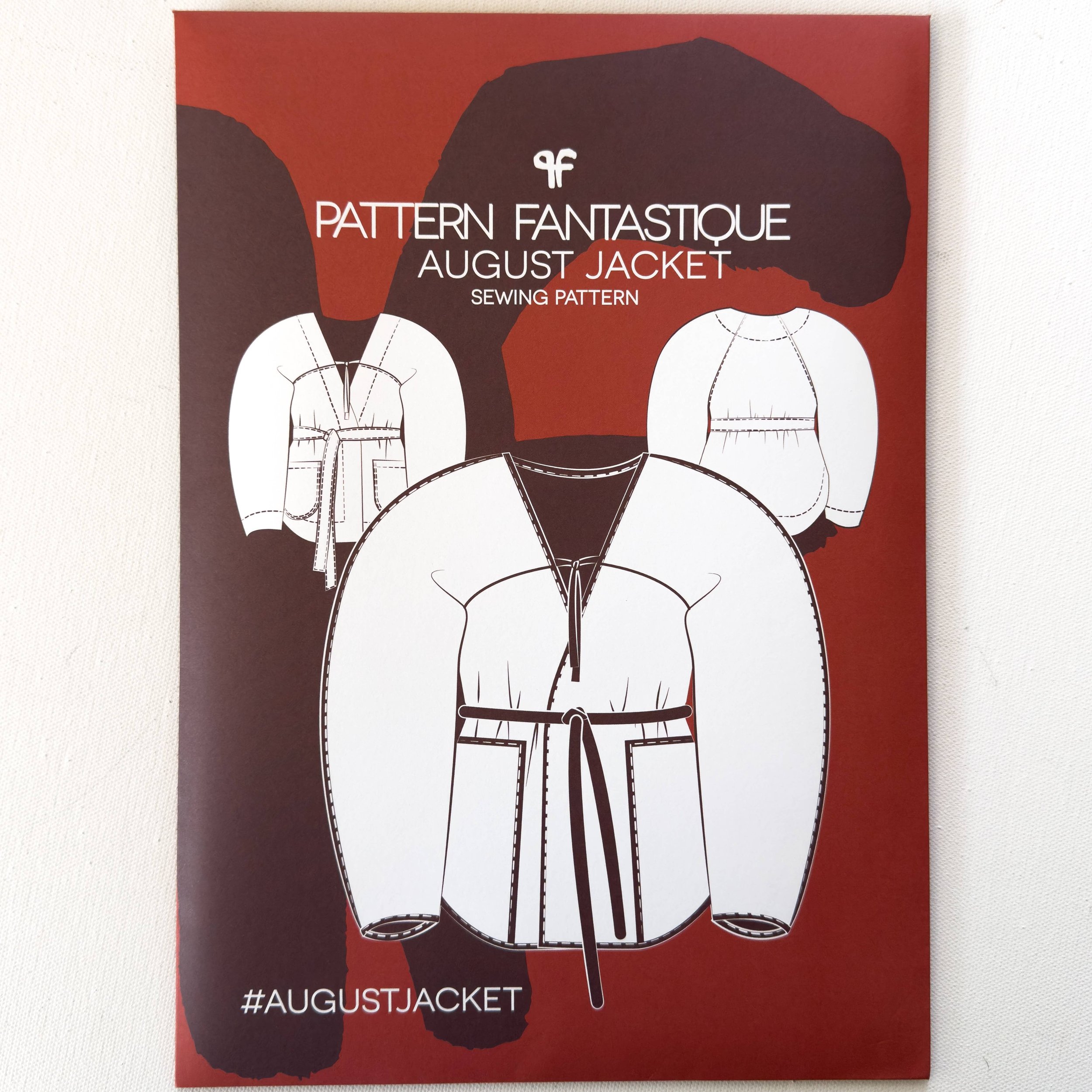 Image 1 of 5
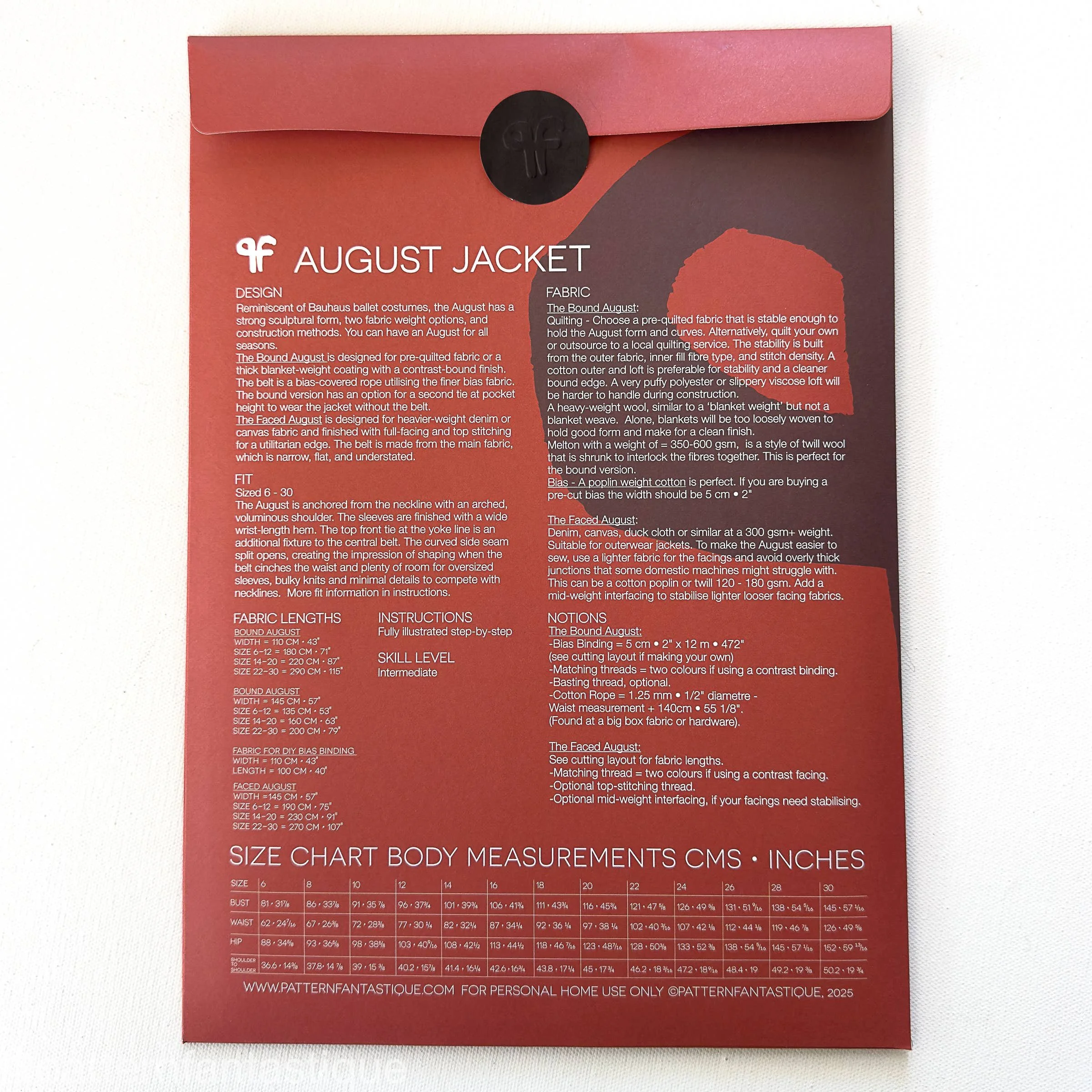 Image 2 of 5
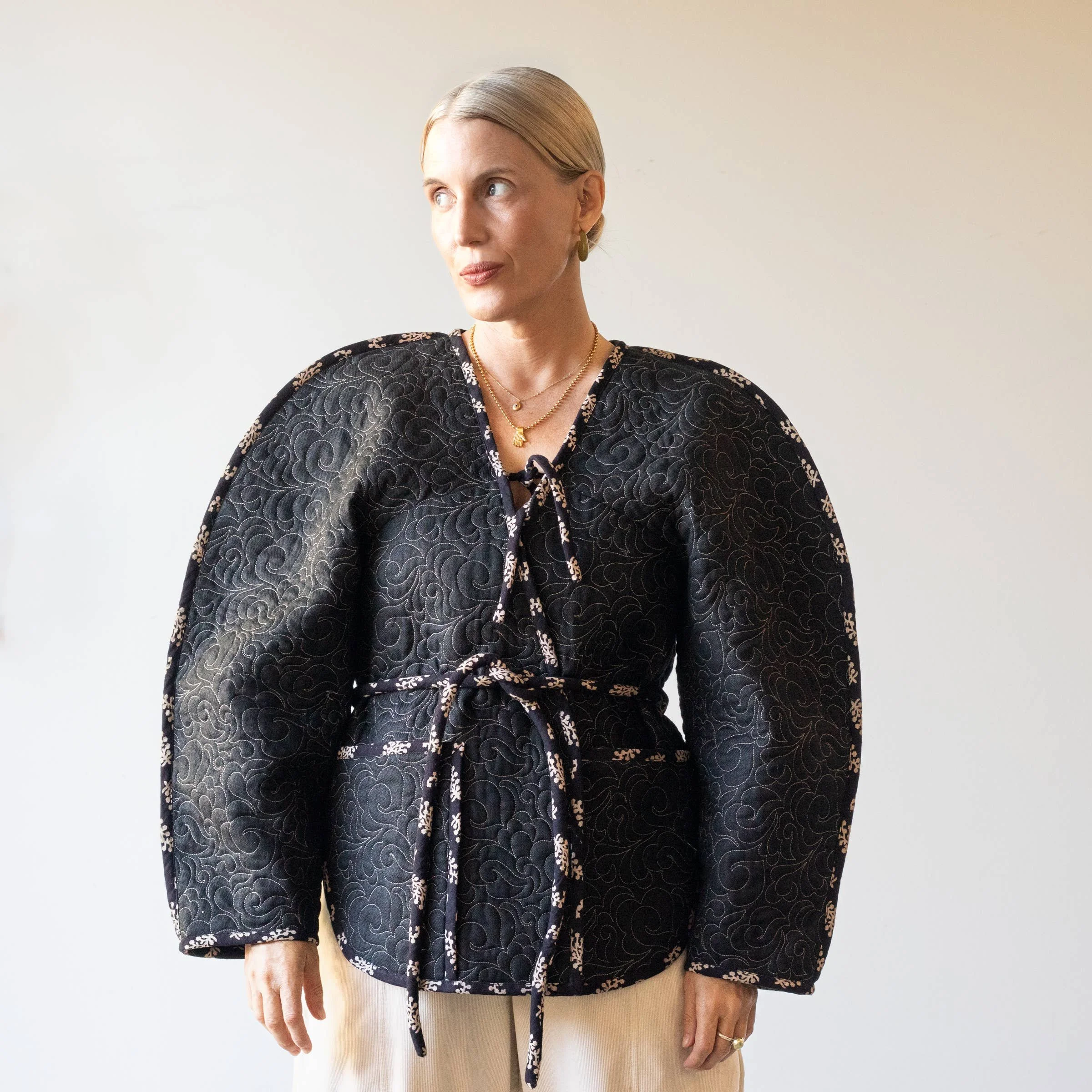 Image 3 of 5
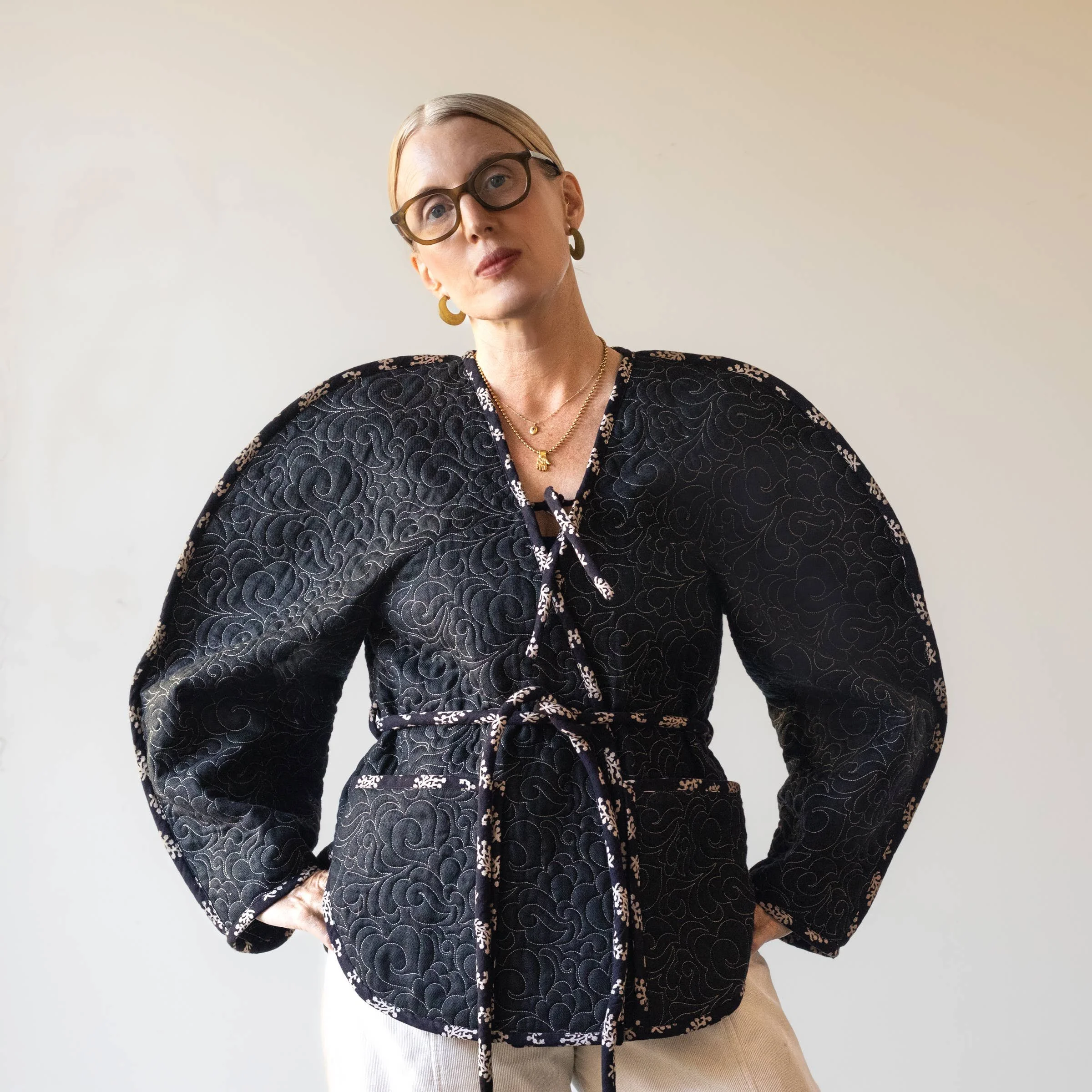 Image 4 of 5
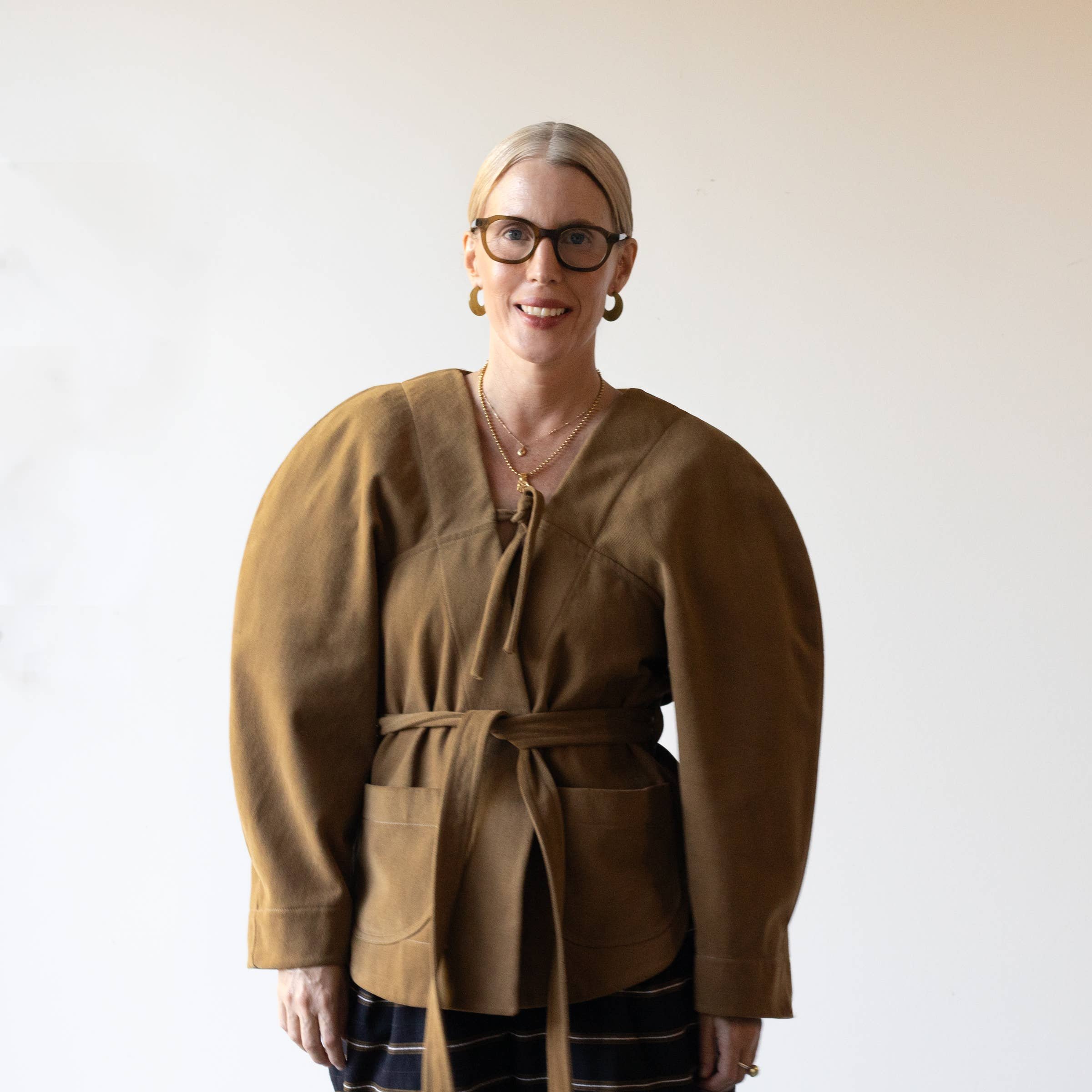 Image 5 of 5